
Buying Guides
Coastal Pergola Buying Guide
Specify a coastal pergola with an exposure brief, documented finish system, compatible connections, drainage access and realistic maintenance and warranty questions.

DIRECT ANSWER
What should I check when buying a pergola for a coastal property?
A coastal pergola should be reviewed as a complete system for the actual exposure, not selected from a claim that aluminum is rust-free. Describe salt spray, shelter, moisture, cleaning access and the intended use. Ask for documented finish preparation, connection materials, component compatibility, drainage access and site-specific structural review. Obtain written care instructions and the applicable warranty conditions. A material name, attractive seaside rendering or generic marine-grade label does not establish the suitability of the supplied configuration.
WHO THIS GUIDE IS FOR
Use this guide to frame the right project questions.
- Homeowner with a sea-facing terrace
- Architect specifying an exposed outdoor structure
- Resort operator reviewing service and ownership obligations
Describe the exposure before asking for a coastal model
Coastal is a broad description. A terrace directly exposed to sea spray differs from a sheltered courtyard in a seaside town, and a poolside structure introduces another set of site conditions. Provide the location, photographs toward the sea, surrounding shelter and the approximate relationship to the shoreline. Explain whether surfaces receive direct spray, remain damp in sheltered corners or can be reached easily for cleaning. These observations help suppliers ask relevant questions rather than issuing a generic seaside recommendation.
The Whole Building Design Guide identifies coastal chlorides and moisture as corrosion concerns. That background supports taking the exposure seriously; it does not classify your site or certify a particular pergola. Ask the responsible project professionals and supplier to define the exposure assumptions used in their proposal. Keep the assumptions in the quotation and approval record so that a change from a sheltered garden to an exposed rooftop does not pass unnoticed as merely a change of address.
Assess the whole assembly, not only the aluminum frame
A pergola contains more than visible profiles. Its assembly can include fasteners, brackets, drive components, seals, wiring, lights and side accessories. Request a component-level explanation of the proposed materials and protective measures appropriate to the exposure. A statement about the frame does not establish the suitability of every connection or electrical enclosure. If an accessory comes from another supplier, identify who reviews the combined arrangement and who supports it after installation.
Avoid treating rust-free as a complete durability specification. Different materials have different deterioration mechanisms, and the condition of joints and finishes matters to the assembled product. Ask for documented recommendations instead of asking for a promise that nothing will ever corrode. If a supplier proposes a different connection or finish for coastal use, have that choice recorded against the actual order. A verbal reassurance is difficult to compare, verify or pass on to the installer.
Ask what the finish specification actually includes
The visible color is only one part of the finish discussion. Ask the supplier to identify the surface preparation, coating system, application controls and care instructions proposed for your order. Request the documents that support any stated standard or certification and check their scope. A coating supplier document, a factory process claim and evidence for the finished assembly are not interchangeable. This guide does not imply that any particular JY Outdoor Pergola product holds a coastal coating certification.
Also ask how cut edges, drilled holes and installation damage are handled. The relevant process should be agreed before site work begins, including what the installer may modify and what requires supplier review. Do not select a touch-up material simply because the color appears similar. Obtain the approved approach and understand any appearance or performance limitations. Keep the finish reference, color information and batch or order identification where available in the handover pack for future service.
Make connections and material interfaces visible in the review
The WBDG corrosion reference explains that dissimilar metals can interact when electrically connected in the presence of an electrolyte. For a pergola purchase, the practical question is how the proposed assembly addresses its material interfaces. Ask the supplier to identify fastener and bracket materials and any specified isolation or protective details. Do not assume that a premium-sounding fastener name automatically resolves every interface, or substitute a locally available fixing without checking compatibility with the approved detail.
The connection to the site needs equal attention. Foundations, anchors and building attachments must be reviewed for the actual substrate and exposure by the responsible professionals. Coastal marketing does not establish structural capacity, and a stronger-looking frame does not verify the supporting construction. Keep corrosion detailing and structural review connected but distinct: both are necessary questions, and evidence answering one does not automatically answer the other. Record who approves each interface and who inspects its installation.
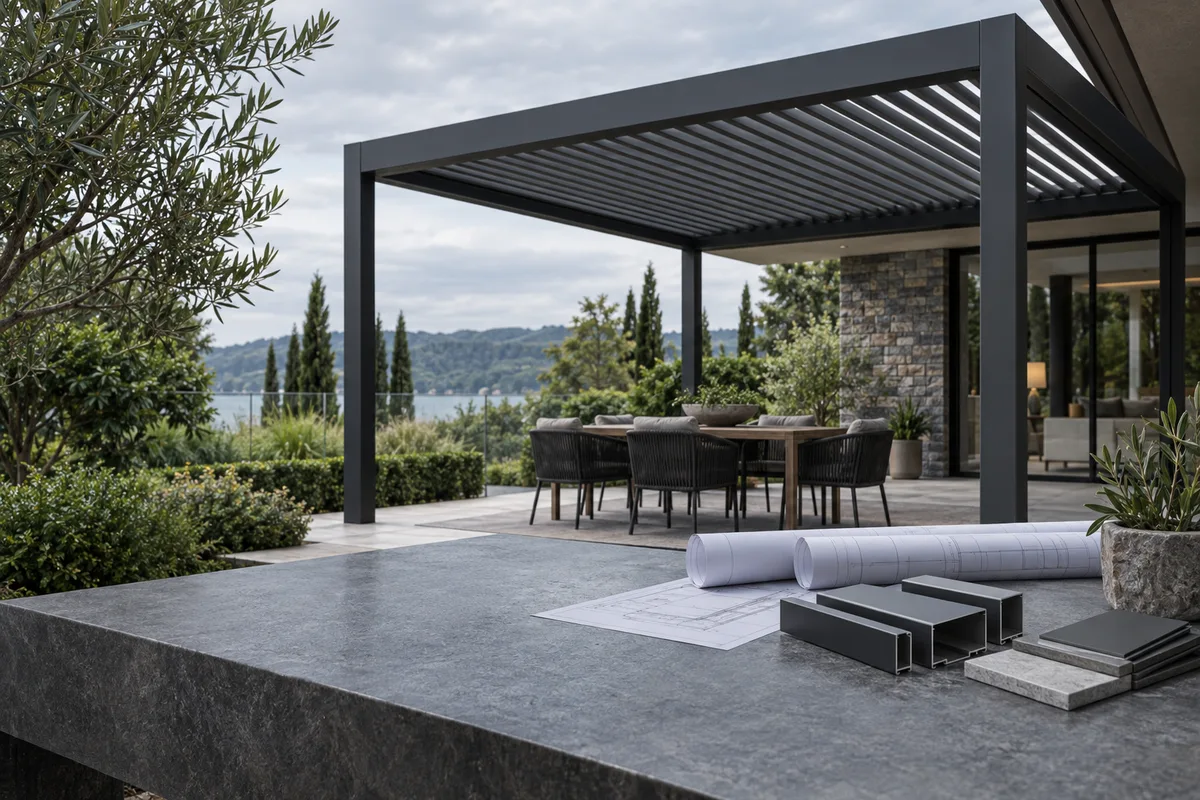
Review water routes and access to sheltered areas
Map the intended rainwater route through the roof system and into the site drainage arrangement. Ask where inspection and cleaning can take place without dismantling unrelated work. Keep post outlets and access points identifiable in the approved drawing. A coastal specification should not distract from ordinary coordination: a blocked outlet, inaccessible gutter or planter placed against a service point can complicate ownership regardless of the quality of the visible finish.
Ask the supplier how sheltered joints and less-visible surfaces should be inspected and cleaned. Do not drill new drain holes, fill designed openings or apply extra sealant as an improvised improvement. Such changes can interfere with the intended system and should be reviewed first. For the detailed roof drainage design, use the engineering information for the selected system; this buying guide focuses on what to request and verify, not on inventing a replacement water-management detail.
Include controls and accessories in the exposure brief
If the project includes motors, lighting, screens or heaters, list them explicitly in the coastal review. Ask for the installation instructions and relevant environmental limitations of each selected component. The suitability of the aluminum frame cannot be extended automatically to an accessory mounted beside it. Clarify cable routing, accessible connections and responsibility for the site power supply with the installer and electrical professional as appropriate. Do not infer electrical suitability from an outdoor lifestyle photograph.
Consider how the equipment will be serviced after occupation. A resort may need replacement components sourced without closing a whole terrace, while a private owner may need a local service contact who can inspect a problem. Ask what identification should be retained, what information a service request needs and whether particular parts have agreed lead-time information at the time of quotation. Do not assume universal availability or make a purchasing decision from an undocumented promise of lifetime support.
Compare care obligations and warranty conditions in writing
Request the actual cleaning method and a schedule appropriate to the supplier assessment of the site. Confirm approved products, rinsing instructions, safe access and what must not be pressure-washed or lubricated. This article does not set a universal coastal cleaning interval: exposure and component instructions vary. For a commercial property, assign the task to a named role and keep records. A maintenance plan is useful only if the people responsible can carry it out safely and consistently.
Read the warranty conditions alongside that care plan. Ask which components are covered, whether coastal exposure is addressed, what exclusions apply and what evidence is needed if a concern arises. Distinguish finish appearance, mechanical parts and installation responsibilities rather than treating a single headline term as comprehensive coverage. If the supplier cannot confirm applicability to your site, keep that issue unresolved before ordering. Do not convert a general warranty statement into an unsupported coastal guarantee.
Use an evidence pack to compare coastal proposals fairly
Send every supplier the same exposure brief, proposed dimensions, operating preferences and accessory list. Ask each to return a defined configuration, material and finish information, connection responsibilities, care instructions and applicable commercial conditions. Record documents as supplied, pending or not applicable. This makes it easier to see whether a proposal actually addresses the site or merely repeats a marine-grade slogan. A missing document is a question to resolve, not a reason to invent the answer.
For a hypothetical sea-facing hospitality terrace, include the operating team in the review before approval. They can identify whether cleaning access is realistic, whether furniture blocks service points and who can respond to an equipment issue. Keep the final approved drawings, order references and handover documents together. The aim is not to find a product advertised as immune to its environment; it is to purchase a documented system whose exposure assumptions, installation interfaces and ownership duties are clear to everyone involved.
COMPARISON
Replace general coastal claims with order-specific evidence requests.
Use this table to structure a discussion, not as project approval.
| Claim or topic | Useful question | Evidence to request |
|---|---|---|
| Marine-grade finish | Which preparation and coating system is proposed? | Defined finish specification and applicable supporting documents |
| Suitable connections | How are fasteners and material interfaces addressed? | Materials and approved connection details |
| Outdoor accessories | Are selected components suitable for this exposure? | Component instructions and environmental limitations |
| Low maintenance | What cleaning and inspection are required here? | Written care method and exposure-specific advice |
| Coastal warranty | Does the actual coverage apply to this site? | Written terms, exclusions and responsibility boundaries |
PROJECT CHECKLIST
Information to prepare
- Describe spray, shelter, moisture and cleaning access in a shared exposure brief.
- Request the materials of visible and hidden assembly components.
- Obtain finish preparation and coating information for the order.
- Verify the scope of any claimed certification rather than inferring it.
- Record connection materials and approved interface details.
- Keep drainage and service access visible on the layout.
- Review motors, screens and other accessories individually.
- Confirm care obligations, local service arrangements and warranty applicability in writing.
COMMON PLANNING MISTAKES
Assumptions to avoid
- Treating aluminum as a complete guarantee against all deterioration.
- Assuming marine-grade has one universal documented meaning.
- Extending frame suitability to every accessory without review.
- Substituting fixings or site coatings without approval.
- Ordering before confirming coastal exclusions and practical cleaning access.
FAQ
Questions about coastal pergola
Is an aluminum pergola suitable near the sea?+
Suitability depends on the complete configuration, actual exposure, finish system, connections, installation and care. Ask the supplier to review your site and provide supporting documents for the proposed order. The aluminum material name alone does not establish coastal performance.
What does marine-grade pergola mean?+
Treat it as a claim requiring a defined specification. Ask what materials, finish preparation, components and exposure conditions the term covers, and request the supporting documentation. Do not assume that different suppliers use the phrase in the same way or that it automatically indicates certification.
Do stainless fasteners solve coastal corrosion?+
No single fastener label resolves every assembly interface. Ask for the actual material specification, compatibility and approved connection detail, including any required isolation or protection. Do not substitute fixings on site without review by the responsible supplier or professional.
How often should a coastal pergola be cleaned?+
Follow the written advice for the selected system and assessed exposure. This guide does not prescribe a universal interval. Confirm approved cleaning products, safe access, rinsing instructions and component restrictions, and keep records where the care or warranty conditions require them.
Does a coastal finish prove the pergola is storm-safe?+
No. Corrosion protection and structural suitability are different questions. The selected configuration, supports, anchors and site conditions require appropriate project-specific review. Follow the actual operating and severe-weather instructions rather than treating a finish description as a load rating.
What should a coastal quotation include?+
Ask for the exposure assumptions, configured model, materials and finish information, connection responsibilities, accessories, installation scope, care instructions and applicable warranty conditions. Keep missing documents and unresolved site checks visible before approval so that the final purchase is based on evidence rather than general marketing terms.
SOURCES AND FURTHER READING
NEXT STEP
Prepare a coastal project brief
Share site exposure, photographs, proposed use and accessories to request a documented review of the intended pergola configuration.
Prepare a coastal project brief