
PERGOLA KNOWLEDGE CENTER
Pergola Guides & Knowledge Center
Practical system education, comparisons, engineering concepts, installation planning and B2B buying guidance for real pergola projects.
Start with the buying guide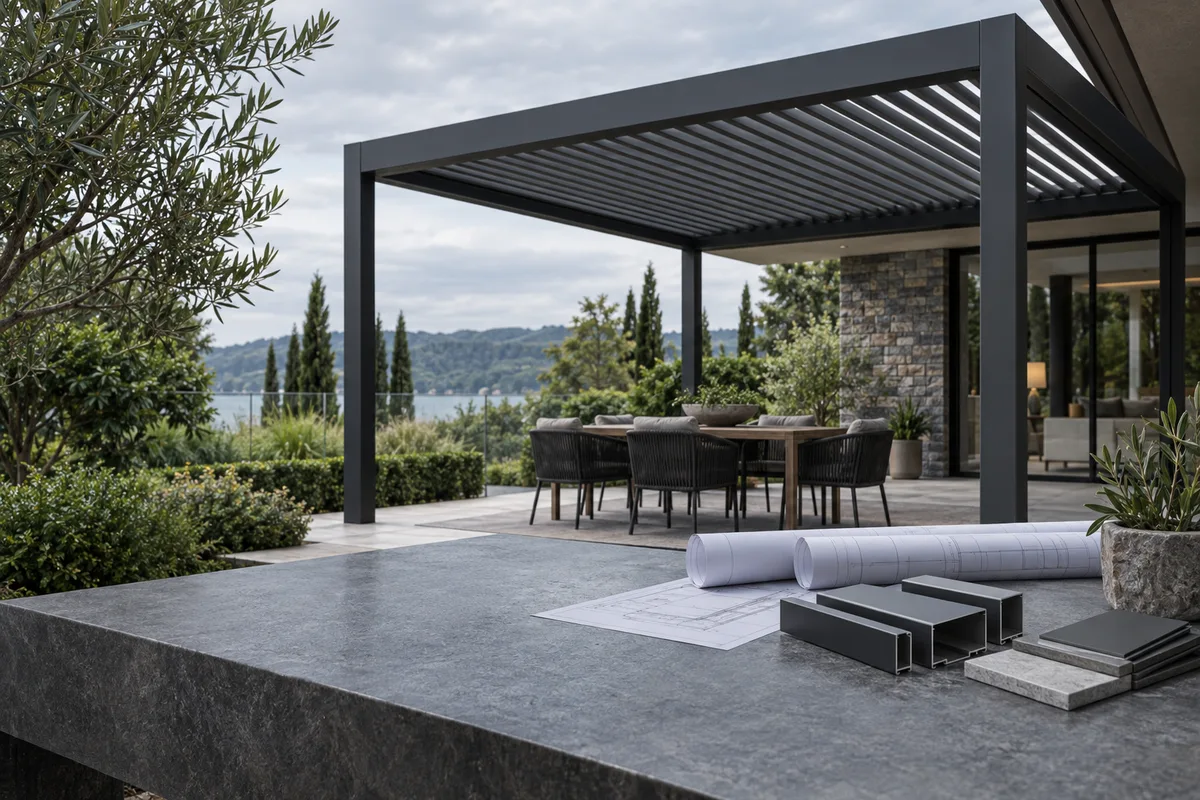
DIRECT ANSWER
What can you learn in the JY Outdoor Pergola Knowledge Center?
The Knowledge Center explains how pergola systems work, how to compare roof and mounting options, which engineering and installation questions need project review, how different applications affect planning, and what B2B buyers should prepare before requesting a quotation. Each Guide connects its informational topic to the relevant products, applications, engineering resources and next planning step.
BROWSE BY DECISION STAGE
Move from first questions to a qualified RFQ.
Understand
How to Choose a Louvered Pergola · How Does a Louvered Pergola Work? · Louvered Pergola Maintenance: Cleaning, Drainage and Seasonal Care · Is a Louvered Pergola Waterproof?
02Compare
Freestanding vs. Wall-Mounted Pergolas · Manual vs. Motorized Louvered Pergolas · Louvered vs. Retractable Roof Pergolas · Aluminum vs. Wood Pergolas: Materials, Maintenance and Project Fit · Pergola vs Gazebo vs Patio Cover · Louvered Pergola vs Retractable Awning · Pergola Roof Types Compared: Louvered, Retractable, Fixed and Polycarbonate · Pergola Side Enclosures Compared: ZIP Screens, Glass and Louver Walls
03Plan
How to Measure for a Pergola Project · Pergola Installation Planning Guide · Louvered Pergola Cost: A Practical Budget and Quote Guide · Pergola Orientation and Louver Direction · What Size Pergola Do I Need? · Motorized Pergola Electrical Planning Guide
04Specify
How to Specify a Louvered Pergola · Commercial Pergola Buying Guide · Coastal Pergola Buying Guide · Louvered Pergola Wind Resistance: What Buyers Should Verify
05Request Quote
Preparing a Useful Pergola Project RFQ
SYSTEM GUIDES
System Guides
2 focused guides for a distinct project decision.
Understand
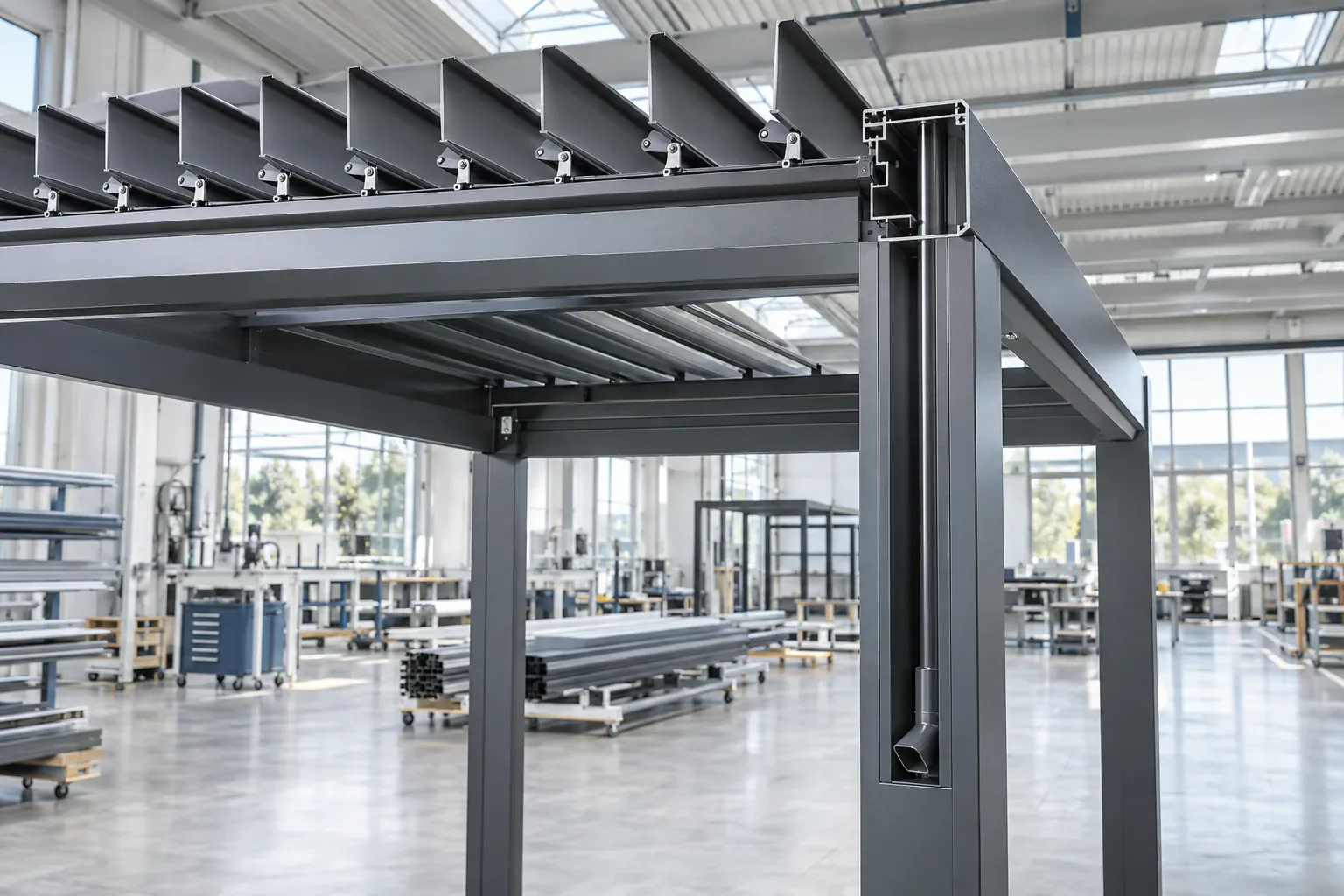
How Does a Louvered Pergola Work?
A louvered pergola uses a structural frame to support parallel roof louvers that rotate around their pivots. Changing the louver angle changes the balance of sunlight, shade and ventilation below the roof. The louvers may be moved by a manual mechanism or a motorized drive, depending on the selected system. When configured for rain management, closed louvers direct water toward collection channels and planned drainage paths. Exact movement, controls, structure and water performance depend on the system and project configuration.
Read guide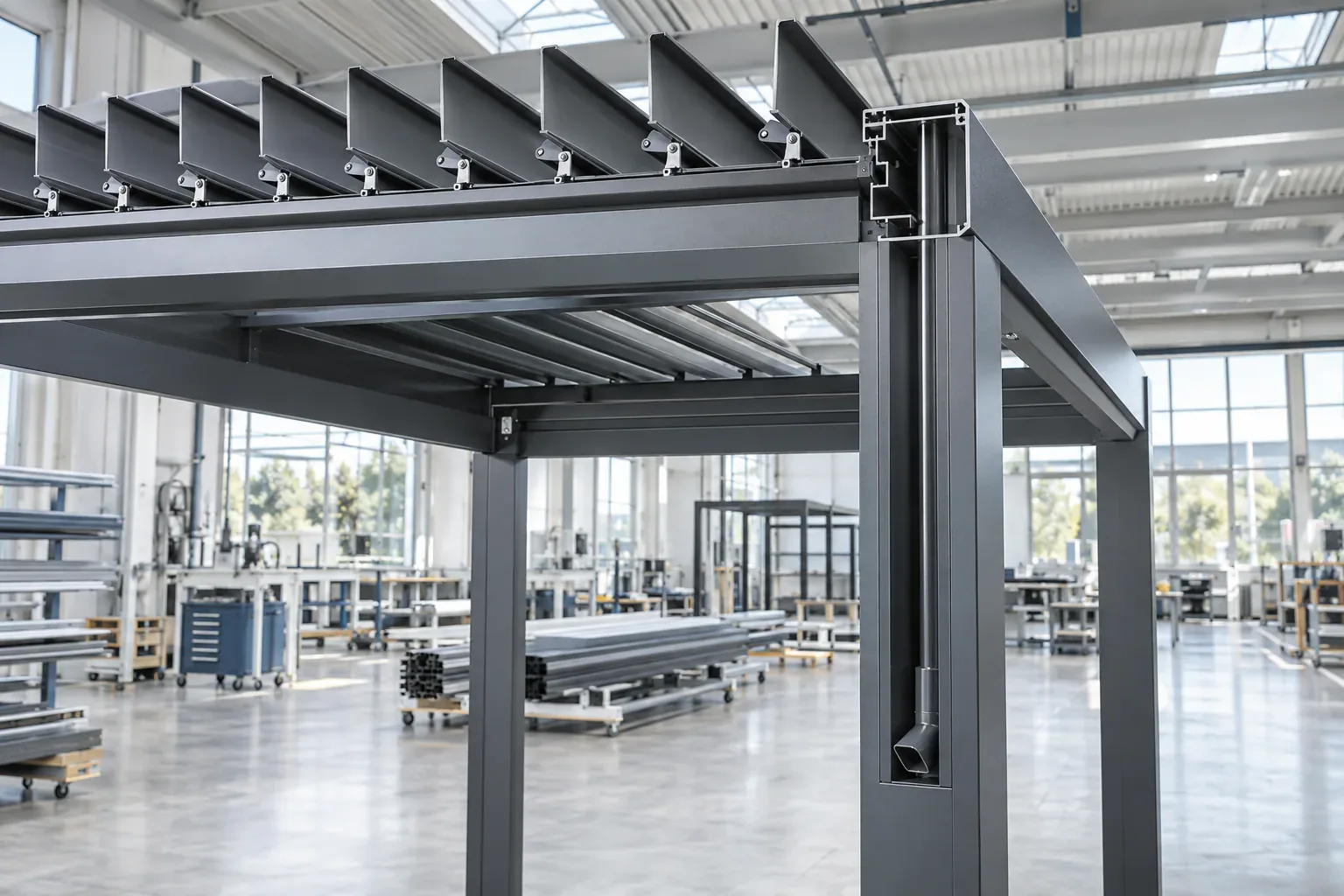
Understand
Louvered Pergola Maintenance: Cleaning, Drainage and Seasonal Care
Maintain a louvered pergola by following the selected system’s instructions for coating care, cleaning, drainage checks, roof operation and service access. Keep accessible collection paths clear using approved methods, observe changes in movement or drainage, and record problems for the supplier. Motorized roofs and accessories require their own equipment guidance. Set inspection frequency around the manual and local exposure, including nearby trees, dust and coastal deposits. Routine owner care should be distinguished from electrical, structural and mechanism repairs.
Read guideBUYING GUIDES
Buying Guides
4 focused guides for a distinct project decision.
Understand
How to Choose a Louvered Pergola
Choose a louvered pergola by matching the intended use, roof operation, mounting condition, coverage area, drainage route, site exposure, desired accessories and project requirements. Decide whether manual louver adjustment, motorized control or a retractable roof concept fits the user experience. Then provide approximate dimensions and site information so a suitable model and configuration can be reviewed rather than selecting on appearance alone.
Read guide
Plan
Louvered Pergola Cost: A Practical Budget and Quote Guide
A louvered pergola has no reliable universal price because the supplied scope and local installation work vary. A useful budget combines the selected roof system, dimensions and module layout with accessories, delivery, foundations, electrical work, installation and any required local review. Compare factory supply prices separately from delivered and fully installed prices. Request an itemized quotation against the same project brief before treating a price per square foot or square metre as a purchasing decision.
Read guide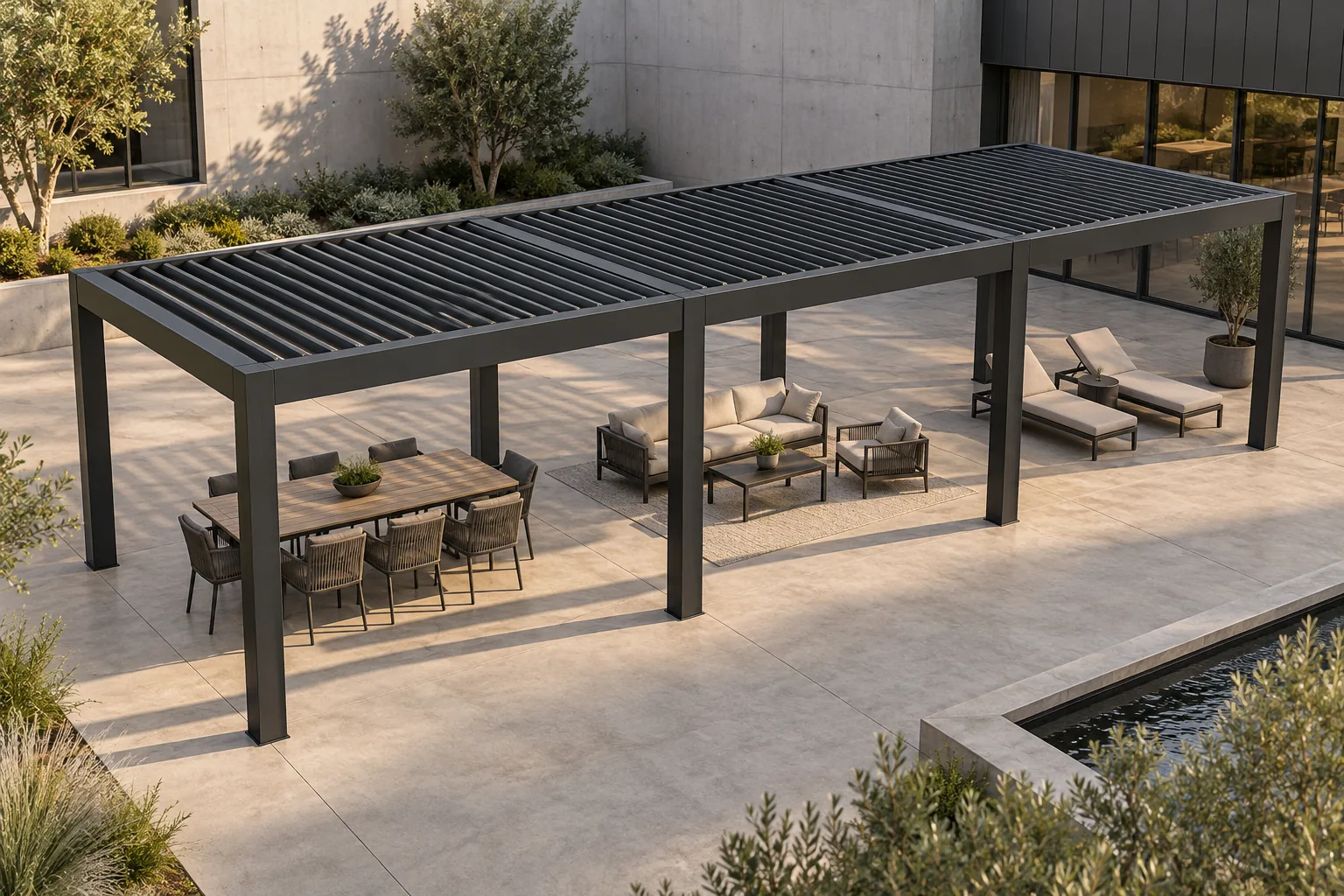
Plan
What Size Pergola Do I Need?
Choose the pergola footprint from the activities inside it, not from the table dimensions alone. Draw the furniture at its actual size, add the space occupied when chairs are in use, then identify walking routes, doors, supports and accessory movement. Compare that usable layout with the selected system dimensions and the shade needed at relevant times. Overall roof size, clear space between posts and genuinely useful shaded area are different measurements, so request all three before approving a configuration.
Read guide
Specify
Coastal Pergola Buying Guide
A coastal pergola should be reviewed as a complete system for the actual exposure, not selected from a claim that aluminum is rust-free. Describe salt spray, shelter, moisture, cleaning access and the intended use. Ask for documented finish preparation, connection materials, component compatibility, drainage access and site-specific structural review. Obtain written care instructions and the applicable warranty conditions. A material name, attractive seaside rendering or generic marine-grade label does not establish the suitability of the supplied configuration.
Read guidePERGOLA COMPARISONS
Pergola Comparisons
8 focused guides for a distinct project decision.
Compare
Freestanding vs. Wall-Mounted Pergolas
Choose between a freestanding and wall-mounted pergola by reviewing the desired location, support layout, building condition, drainage path, circulation and architectural relationship. A freestanding layout uses its own post arrangement and offers more placement flexibility. A wall-mounted or building-adjacent layout can align closely with a façade, but the wall interface and supporting condition require project-specific review. Neither option is universally better.
Read guide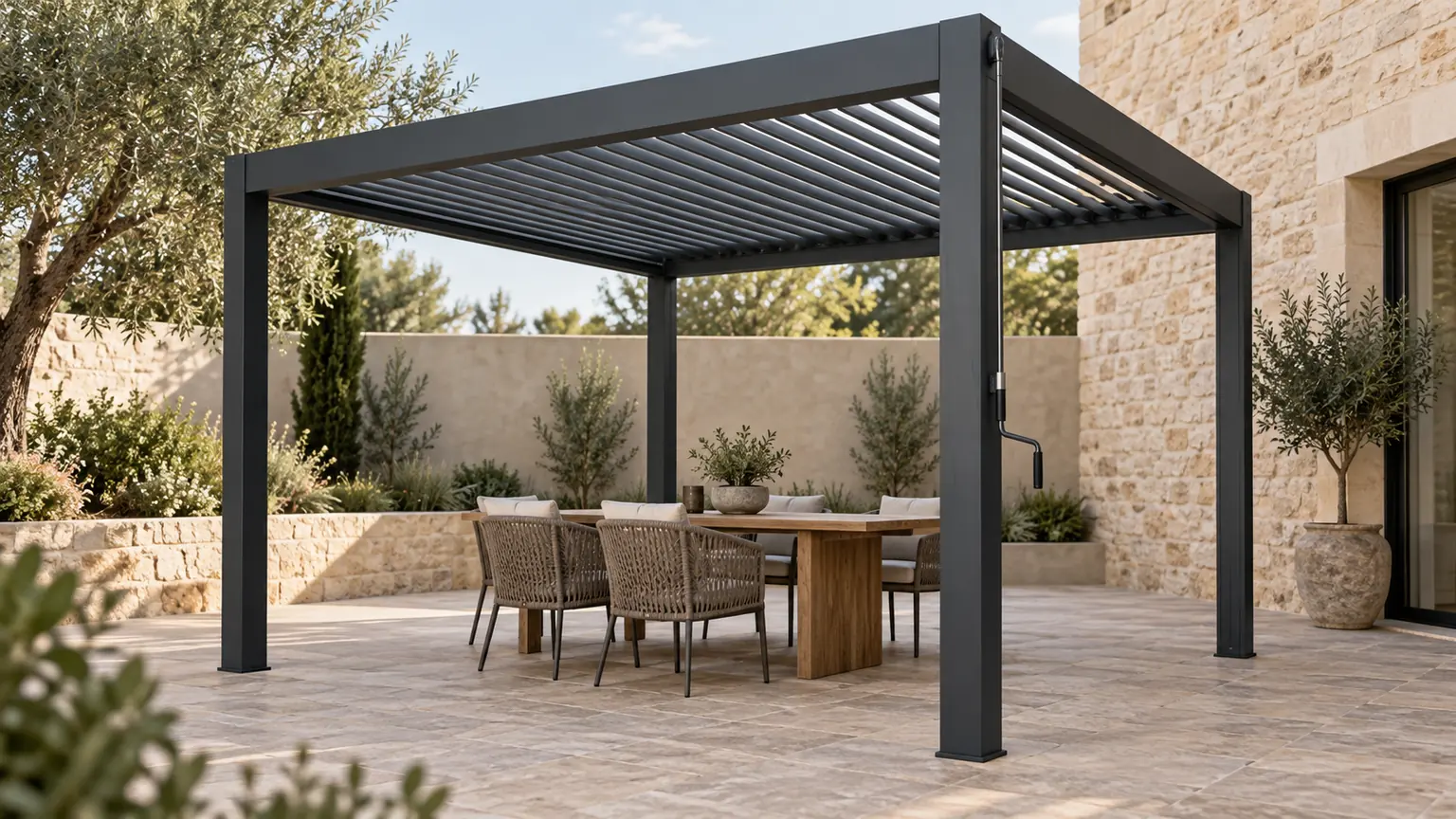
Compare
Manual vs. Motorized Louvered Pergolas
A manual louvered roof uses direct mechanical input, such as a crank, to adjust roof angle. A motorized louvered pergola uses a powered drive and control system for push-button adjustment. This page explains the operating difference for neutral education; manual operation is not a current JY Outdoor Pergola product offering. Selection principles depend on use, power availability, user access, controls and maintenance planning—not on a universal ranking.
Read guide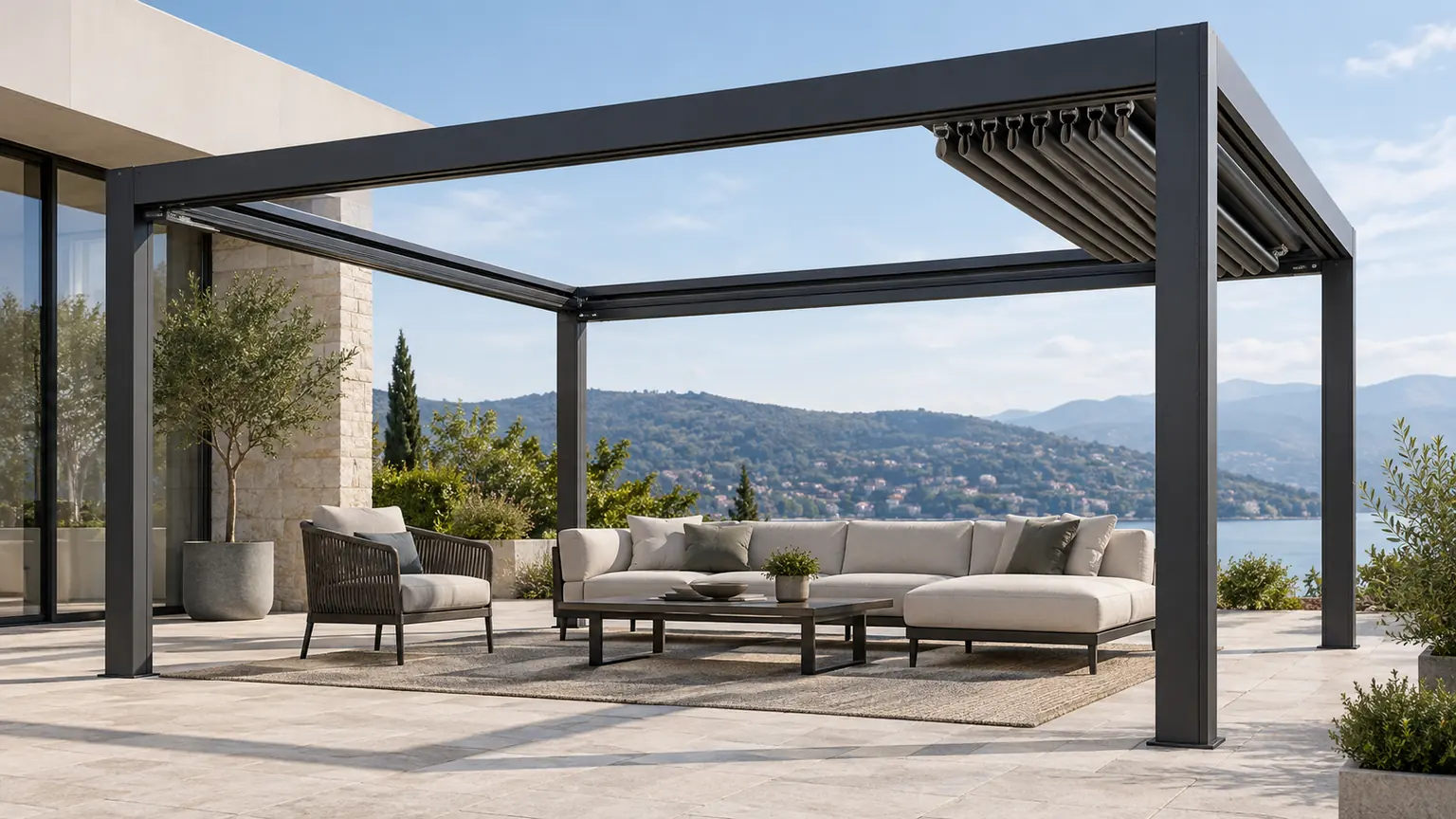
Compare
Louvered vs. Retractable Roof Pergolas
A rotating louvered pergola changes the angle of parallel roof blades to balance shade, daylight and ventilation. A retractable roof pergola moves roof elements away from part of the covered area to create a larger open-sky opening. Both require coordinated frame, movement and rainwater planning. Choose by the desired opening experience, movement clearance, controls, application and project constraints rather than treating one mechanism as universally better.
Read guide
Compare
Aluminum vs. Wood Pergolas: Materials, Maintenance and Project Fit
Choose an aluminum or wood pergola by comparing the complete roof system, preferred appearance, maintenance expectations and site requirements. Aluminum is commonly selected for coordinated adjustable-roof systems and a coated architectural finish. Wood offers natural grain and a wide range of traditional construction details, with care requirements that depend on species, treatment and exposure. Neither material alone establishes rain protection, structural suitability or service life. Compare equivalent configurations and request the applicable care and project documentation.
Read guide
Compare
Pergola vs Gazebo vs Patio Cover
For purchase planning, compare the roof and support arrangement rather than the product name alone. An open pergola uses spaced overhead members; a louvered pergola adjusts the roof opening; a gazebo is commonly a freestanding, fixed-roof garden shelter; and a patio cover often shelters a terrace beside a building. These are working descriptions, not local code classifications. Choose according to the daylight, shade, rain management, circulation and building interfaces your particular site needs.
Read guideCompare
Louvered Pergola vs Retractable Awning
Choose by the required roof behavior and site arrangement. A louvered pergola adjusts blades within a supporting frame; a retractable fabric awning deploys a canopy from its storage position. An awning can suit a brief focused on deployable shade, while a pergola can suit a defined outdoor zone with compatible accessories. Neither choice removes the need to review attachment, exposure, operation and maintenance. Compare the selected products and installed scopes, not category-wide promises about price or weather resistance.
Read guide
Compare
Pergola Roof Types Compared: Louvered, Retractable, Fixed and Polycarbonate
The best pergola roof is the one whose behavior matches the intended space and site. Rotating aluminum louvers adjust shade and ventilation while remaining over the opening. A retractable roof moves fabric or roof elements toward a storage zone to reveal more open sky. A fixed solid roof provides one continuous overhead condition, while polycarbonate can admit daylight through a fixed panel. Compare rain strategy, heat and daylight, movement, drainage, structural support, maintenance, noise, appearance and local requirements before comparing price.
Read guide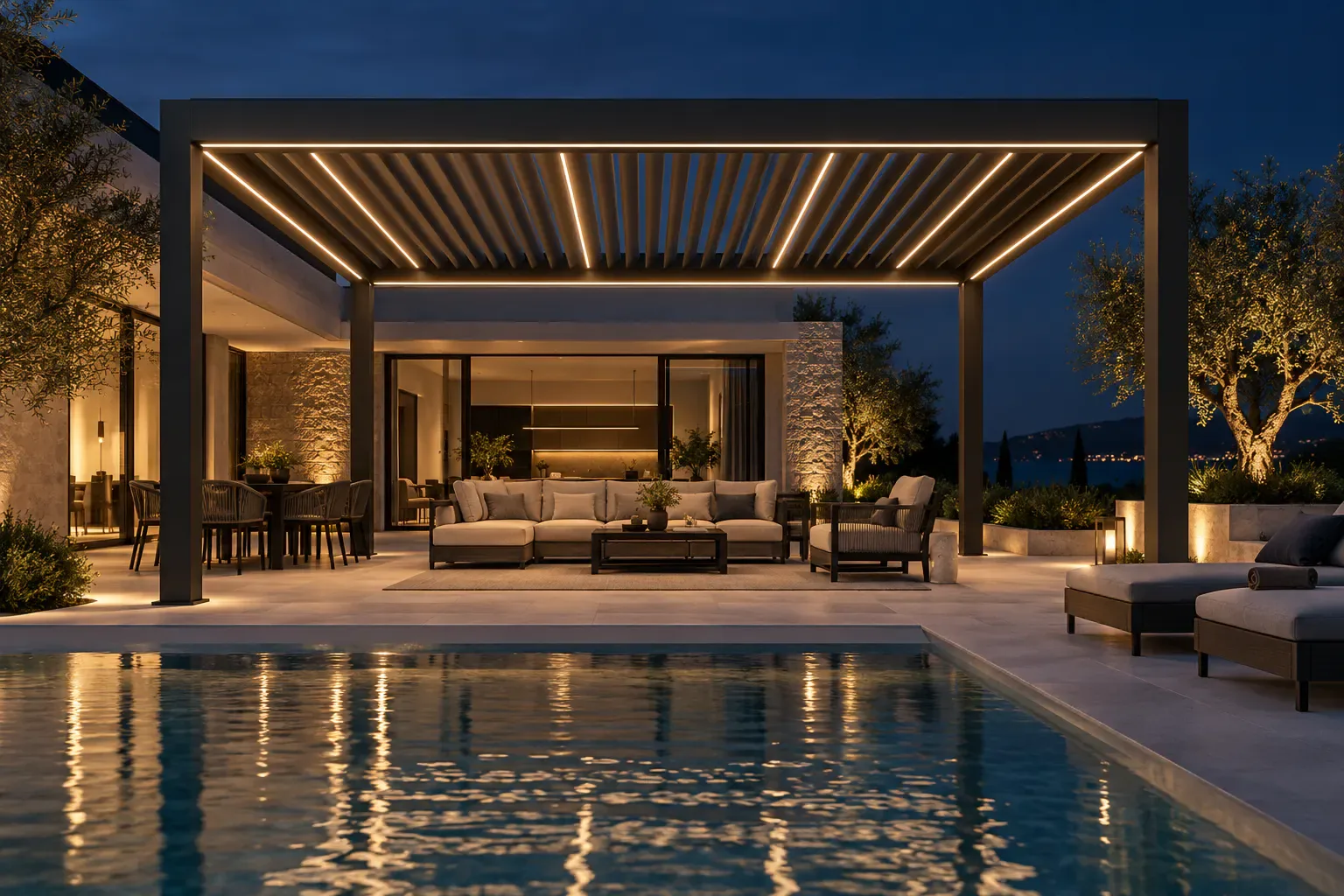
Compare
Pergola Side Enclosures Compared: ZIP Screens, Glass and Louver Walls
The best pergola side enclosure depends on the problem being solved. A guided ZIP screen can provide adjustable shade, privacy and some side-exposure management. Sliding or folding glass preserves views while creating a more substantial transparent boundary. A fixed louver wall or sliding grille provides architectural privacy with ventilation. None should be assumed to create a universally weatherproof room. Compare opening dimensions, movement, stacking, thresholds, wind exposure, structure, controls, cleaning, circulation and local requirements with the selected pergola model.
Read guideENGINEERING & PLANNING
Engineering & Planning
7 focused guides for a distinct project decision.
Specify
How to Specify a Louvered Pergola
A useful louvered pergola specification defines the intended use, roof operation, mounting condition, approximate dimensions, support interfaces, drainage route, electrical needs, accessory zones, finish direction and required project documents. It should separate known project inputs from items that still require engineering review. Model-specific catalogue values can guide early selection, but the final configuration must be confirmed for the site and applicable local requirements.
Read guide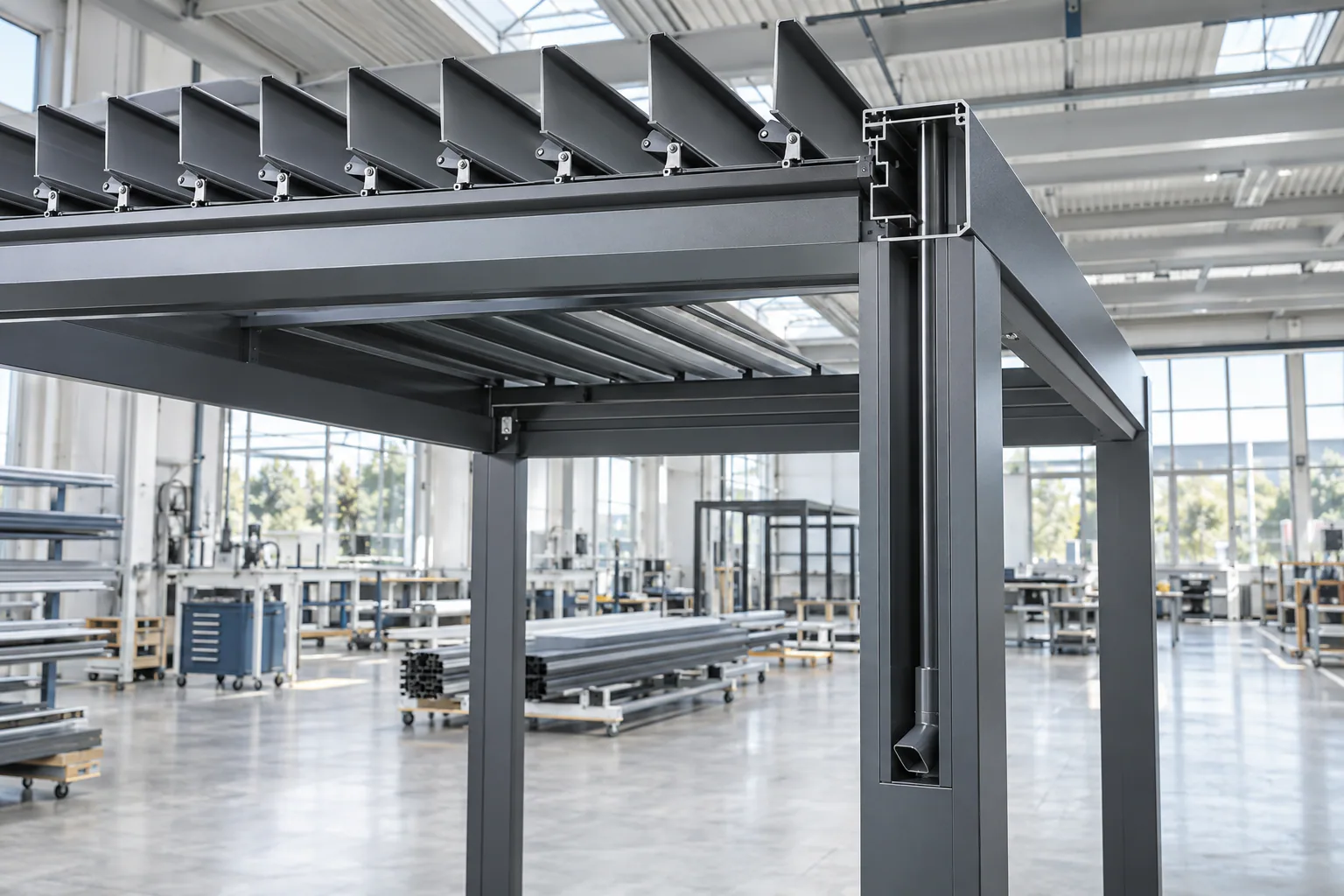
Plan
How to Measure for a Pergola Project
Measure the overall available width, projection and desired finished height, then record walls, doors, windows, eaves, parapets, columns, drains, utilities, obstacles and possible support positions. Use one unit consistently and label the orientation of every dimension. Add wide and close site photographs and note whether dimensions are approximate. These inputs support product and quotation review; they do not replace project-specific structural design or a professional site survey.
Read guide
Plan
Pergola Installation Planning Guide
Before installation, confirm the approved layout, dimensions, support conditions, building interfaces, drainage destination, electrical requirements, accessory zones, delivery route, lifting or handling plan, working area and local project responsibilities. Installation planning should use the selected system documentation and project-specific review. A general guide can organize questions, but it should not prescribe unverified anchors, foundation depths, crew size or installation time.
Read guide
Plan
Pergola Orientation and Louver Direction
There is no universally best compass direction for pergola louvers. Start with the site location, north reference, roof height, occupied furniture positions and the times and seasons when shade matters. Then compare the actual blade orientation and rotation geometry using a site-specific shadow study. Overhead louvers cannot solve every low-angle side exposure. Ask the supplier to distinguish the blade axis, opening direction and operating angle instead of accepting a simple north-south or east-west rule.
Read guide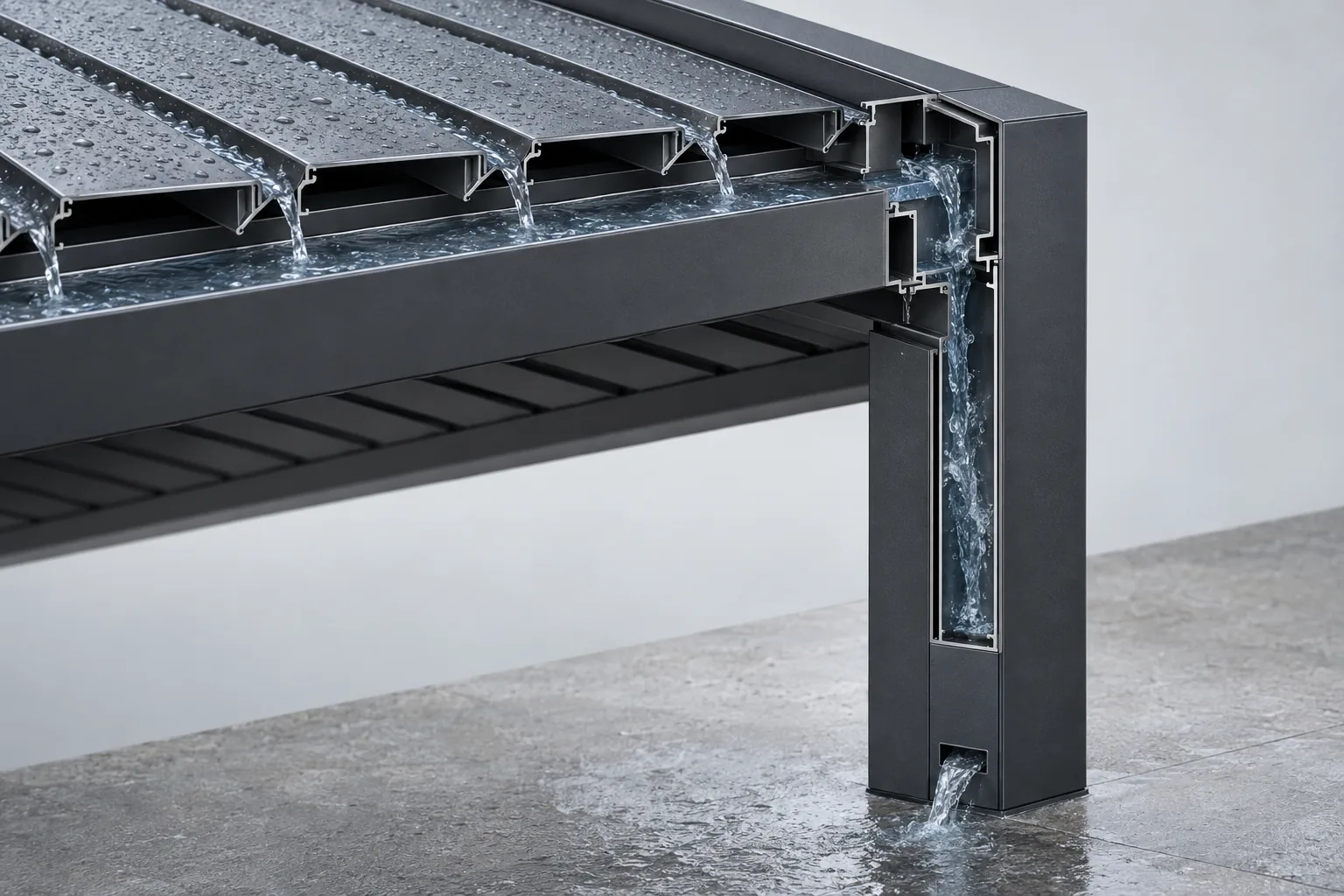
Understand
Is a Louvered Pergola Waterproof?
A louvered pergola should not be described as universally or completely waterproof. In a compatible rain-management configuration, closed louvers can overlap and guide water toward perimeter channels, outlets and a planned discharge route. The result still depends on the selected system, roof pitch and geometry, interfaces, installation, maintenance, rainfall, wind direction and drainage capacity. Open sides remain exposed to wind-driven rain. Ask for the exact water path, operating limits and installation details for the proposed model instead of relying on the word waterproof alone.
Read guide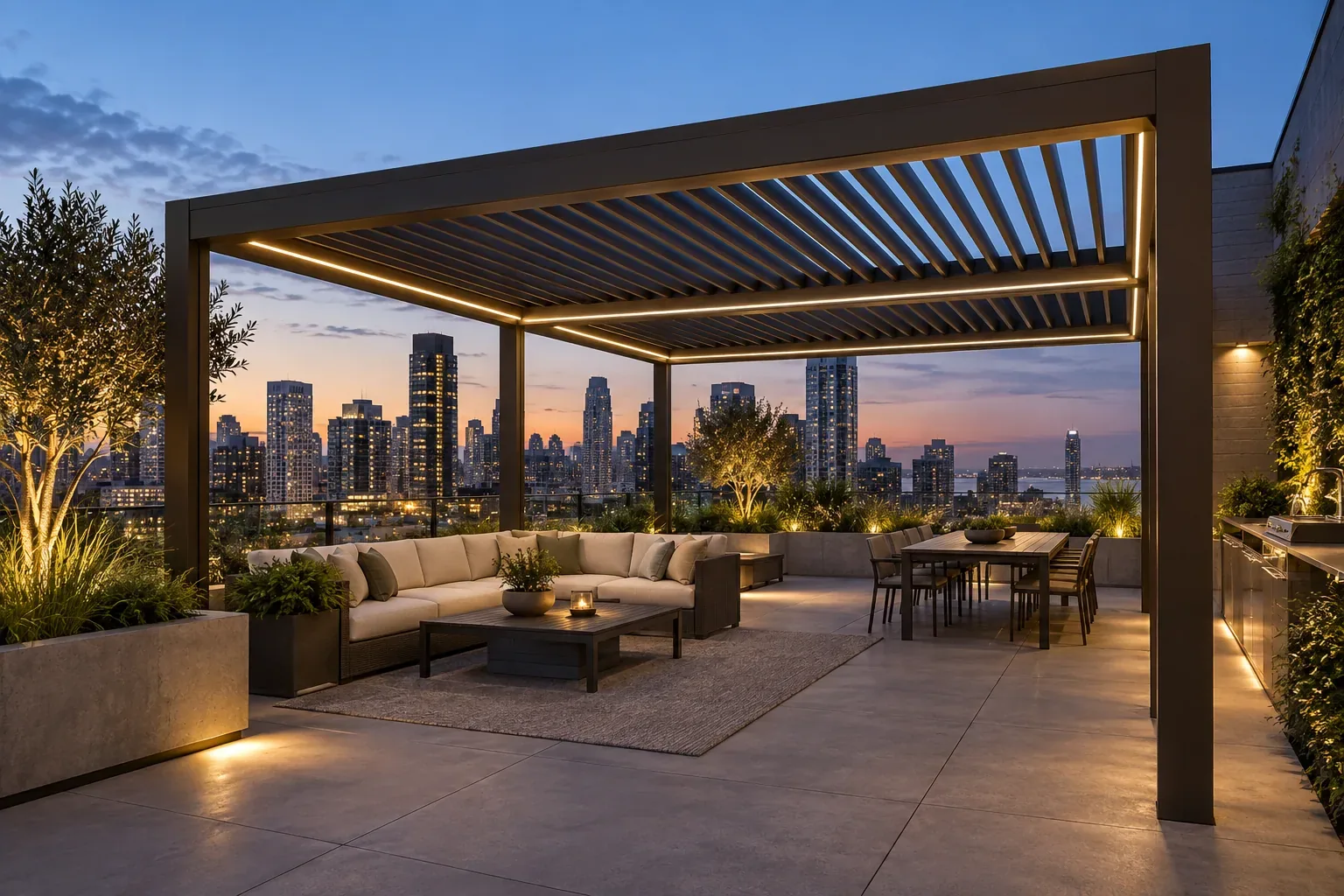
Specify
Louvered Pergola Wind Resistance: What Buyers Should Verify
A louvered pergola can only be assessed for wind after the exact site, governing design basis, structure, module layout, support arrangement, connections, foundations and roof operating rules are known. A generic speed printed beside a product photo does not approve a project. Wind actions vary with location, terrain, height, surrounding buildings, geometry and enclosure or accessory conditions. Ask for model-specific engineering information and have the complete load path, anchors and supporting construction reviewed by the responsible professionals for the actual site.
Read guide
Plan
Motorized Pergola Electrical Planning Guide
A motorized pergola needs a project-specific plan for the selected motor and controls, incoming supply, protection, isolation, cable routes, connections, control locations, sensors where compatible, lighting or accessory loads, commissioning and future service access. Requirements vary by product, voltage, jurisdiction and site exposure. The pergola supplier should provide model-specific information, while qualified local electrical professionals design and install the site electrical work to applicable requirements. Do not select conductor sizes, protective devices or connection methods from a generic article.
Read guideB2B PROCUREMENT
B2B Procurement
2 focused guides for a distinct project decision.
Request Quote
Preparing a Useful Pergola Project RFQ
A useful pergola RFQ includes the project location, intended application, approximate width, projection and height, quantity, mounting condition, preferred roof operation, finish direction, accessories, electrical expectations, site photographs, available drawings and delivery destination. Unknown details can be marked for review. The goal is not to complete structural design before contacting a supplier, but to provide enough context for a relevant configuration and follow-up questions.
Read guide
Specify
Commercial Pergola Buying Guide
Commercial buyers should define the operating use, seating and circulation plan, coverage zones, roof operation, module strategy, drainage route, electrical and accessory needs, maintenance access, project documentation and local requirements before requesting a proposal. Quantity and delivery destination also matter. Product selection should follow the operational brief and site constraints rather than a generic residential layout or an unverified performance claim.
Read guidePROJECT REVIEW
Ready to prepare a quotation request?
Share the site, approximate dimensions, application and preferred options.
Request a quote