
Pergola Comparisons
Aluminum vs. Wood Pergolas: Materials, Maintenance and Project Fit
Compare aluminum and wood pergolas by roof function, appearance, maintenance, project costs, site exposure and the questions to ask before buying.
DIRECT ANSWER
Is an aluminum pergola better than a wood pergola?
Choose an aluminum or wood pergola by comparing the complete roof system, preferred appearance, maintenance expectations and site requirements. Aluminum is commonly selected for coordinated adjustable-roof systems and a coated architectural finish. Wood offers natural grain and a wide range of traditional construction details, with care requirements that depend on species, treatment and exposure. Neither material alone establishes rain protection, structural suitability or service life. Compare equivalent configurations and request the applicable care and project documentation.
WHO THIS GUIDE IS FOR
Use this guide to frame the right project questions.
- Homeowner comparing patio materials
- Landscape designer coordinating a garden
- Architect assessing appearance and system function
- Commercial buyer planning ownership responsibilities
Compare the same kind of outdoor space
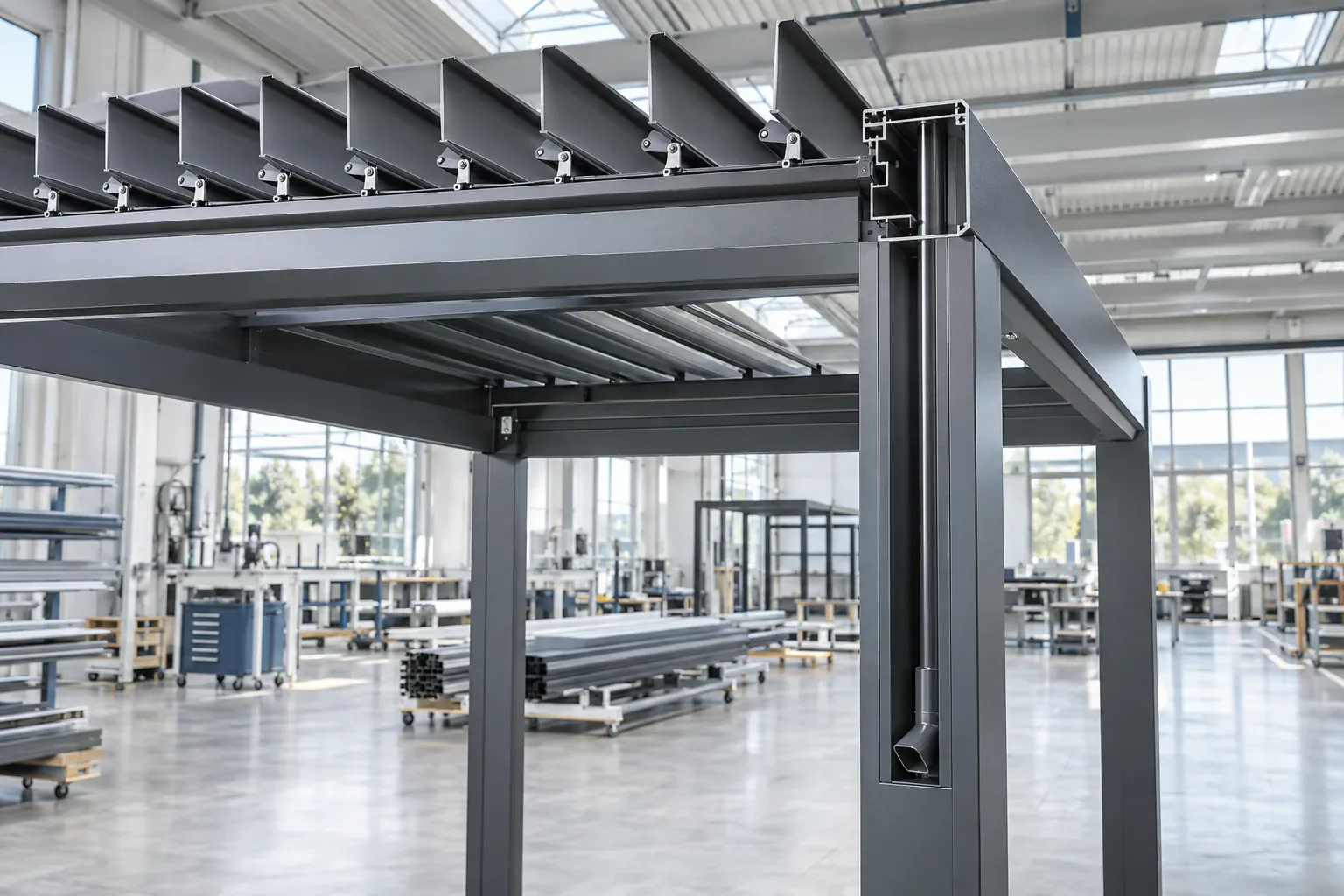
A material comparison can go wrong before it starts. A timber frame with fixed open rafters is not functionally equivalent to an aluminum system with rotating louvers, gutters and a motorized drive. One may create a garden feature and patterned shade; the other may be intended to adjust daylight and coordinate roof water collection. Write down the roof behavior you want before deciding whether either proposal answers the same need.
Separate three decisions: frame material, roof mechanism and optional enclosure. Ask each supplier to describe these independently. This is particularly useful when comparing a traditional wood structure, a wood frame with a separate roof product and an integrated aluminum pergola. The difference in price or appearance may come from the roof and accessories as much as from the material of the posts and beams.
Match the material expression to the building and garden
Wood brings visible grain, variation between pieces and opportunities for traditional joinery and profiles. It can suit a planted garden, a rural building or a project where the structure is intended to age visibly. Ask for the actual species, grade and finish rather than relying on the generic word wood. Photographs of a newly finished example may not represent the appearance the owner will see after outdoor exposure.
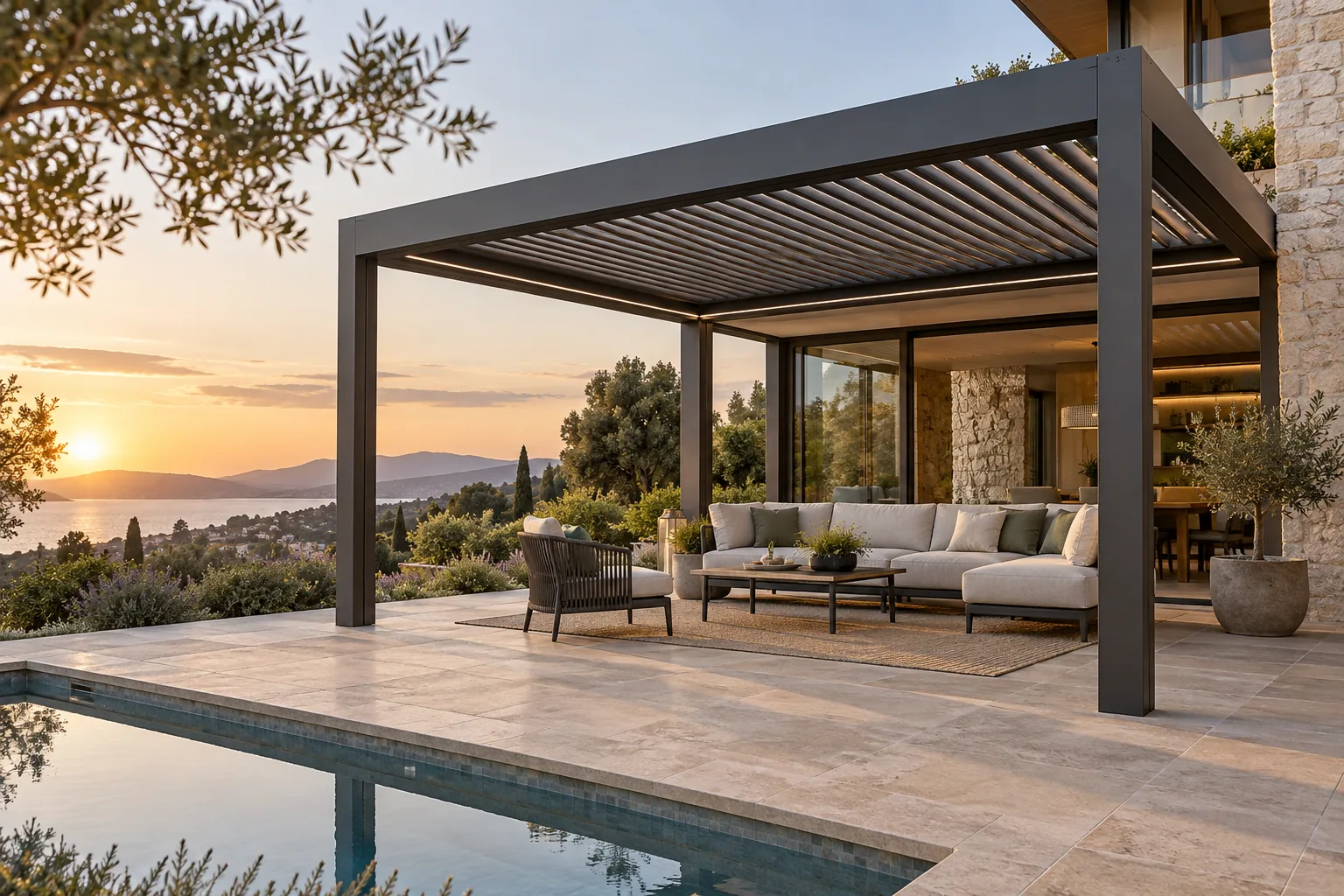
Coated aluminum provides a different architectural language: defined profiles, repeated components and coordinated colors. Evaluate the proposed finish sample beside the window frames, paving and other metalwork. A color name alone does not communicate gloss, texture or how a large surface looks in sunlight. Where a timber-effect finish is proposed, review the sample as a distinct finish choice rather than assuming it will reproduce every quality of natural wood.
Understand what material properties do and do not tell you
The US Forest Service Wood Handbook treats moisture behavior, dimensional changes, biodeterioration and finishing as separate wood design topics. For outdoor selection, the practical lesson is to ask how the chosen timber and its details address exposure. Species, treatment, coatings and water-shedding connections are relevant questions; a broad claim about all timber does not replace that information. The handbook is background material, not an approval for a particular pergola.
For an aluminum proposal, ask for the specified surface finish, connection materials and care instructions for the environment. Do not turn a material description into a promise that the entire assembly is corrosion-proof or requires no care. A pergola also contains fasteners, joints, moving parts and potentially electrical equipment. The quality of those interfaces and their suitability for the site need to be considered alongside the principal frame material.
Compare the maintenance work the owner will actually perform
For wood, request an upkeep plan that identifies cleaning, inspection and the chosen finish strategy. Some owners prefer an intentionally weathered appearance; others expect a consistently maintained color. Those are different maintenance briefs. Ask how accessible faces, end details and connections will be checked and how any future finish work will be carried out around furniture, planting and the adjacent building.
For aluminum, request compatible cleaning methods, coating care and inspection guidance for drainage and moving components. Avoid describing an operable pergola as maintenance-free. A motor, screen or seal does not acquire the same care requirements as a post simply because both belong to one system. For either material, choose a routine the owner or facilities team can reasonably carry out and identify who will handle work beyond routine care.
Evaluate shade and rain management as system functions
A fixed open roof provides a different shade pattern from adjustable louvers. Evaluate the seating area during the times it will be used: an attractive midday photograph does not explain low-angle afternoon sun. Check the orientation, nearby buildings and desired views, then decide whether roof adjustment or a side-shading option is useful. This exercise helps establish the function before a material preference narrows the options.
Rain protection also depends on roof geometry, joints, collection channels, discharge routes and the side exposure of the space. An open timber pergola and an integrated louvered roof should not be compared using the same rain assumptions. Where a closed roof is proposed, ask about its performance conditions and installation requirements. Screens or glass can change the enclosure concept and require their own compatibility and project review.
Keep structural suitability tied to the actual project
The word aluminum or timber does not establish a safe span, anchoring arrangement or weather rating. The complete structure includes member sizes, connections, supports, foundations and the specific site conditions. Compare the proposed drawings and available documentation for each option. Ask what configuration the documentation covers and what still needs a qualified local professional to review.
This is especially relevant when a buyer wants fewer posts or plans to add side enclosures. A visually similar arrangement can have different structural implications when openings, connections or exposure change. Establish the desired clear areas first, then let the responsible designer assess feasible layouts. Do not transfer a load statement from a different model or a different material into the project brief as if it were a completed check.
Compare complete costs and service arrangements
Compare material quotations only after aligning footprint, height, roof behavior, finish, accessories and the installation boundary. A locally built wood structure and a factory supplied aluminum system may allocate surveys, foundations, transport and assembly differently. Mark each responsibility as included or excluded. Ask for the cost of a defined project rather than using a broad material label as a shortcut for affordability.
Then discuss repair and component availability. For timber, ask who can inspect and repair the specified construction and finish. For a proprietary operable roof, ask how components are identified, who diagnoses faults and how replacement parts are requested. Record the warranty terms for the actual system. Neither an assumed lifetime nor an unsupported claim about resale value is a substitute for an understandable service path.
Ask for evidence behind environmental claims
Avoid deciding that one pergola is environmentally preferable from the material name alone. Request evidence relevant to the actual supplied product, such as sourcing information, recycled-content documentation where available, finish information or a product environmental declaration. Check which components and life-cycle stages any document covers. A statement about a raw material is not automatically a statement about the finished structure delivered to your site.
Consider expected use, repair, replacement parts, packaging and end-of-use arrangements as part of the purchasing discussion. These questions are useful even when the available documents do not support a formal comparison. Keep verified information separate from assumptions. If environmental performance is a contractual requirement, define the evidence the project team needs before accepting a general green marketing claim.
Build a short decision brief before choosing
A traditional garden project may place the greatest value on natural grain and a fixed architectural feature. Another owner may prioritize an adjustable roof, integrated controls and a coordinated metal finish. A hospitality operator may prioritize service access and a clear upkeep responsibility. State these priorities in order and compare each proposal against them; a useful choice is the one that meets the brief and can be supported over time.
JY Outdoor Pergola supplies aluminum pergola systems. This comparison explains the questions to ask about both materials; it does not imply that wood systems are part of the current range. Once your preference is clear, prepare dimensions, photographs, the intended use and the desired roof behavior. Those inputs allow the discussion to move from a broad material comparison to a practical project configuration.
COMPARISON
Aluminum and wood: questions that change the decision
Use this table to structure a discussion, not as project approval.
| Decision | Aluminum pergola | Wood pergola |
|---|---|---|
| Appearance | Review actual coating color, gloss and texture | Review species, grain, grade and finish strategy |
| Roof function | Confirm the selected adjustable or fixed system | Confirm whether the proposal is open or has a separate roof |
| Upkeep | Follow coating, drainage and equipment care instructions | Follow the chosen timber, treatment and finish care plan |
| Engineering | Review the complete model and configuration | Review members, connections and project design |
| Costs | Align supply, delivery, site work and accessories | Align construction, roof, finish and site responsibilities |
| Service | Identify components and the supplier service route | Identify inspection, repair and refinishing responsibilities |
PROJECT CHECKLIST
Information to prepare
- Intended use and normal occupancy times
- Required shade and roof behavior
- Material and finish samples
- Timber species or aluminum finish specification
- Site exposure and support conditions
- Complete installed scope and exclusions
- Cleaning and inspection responsibilities
- Repair options and component identification
- Written warranty terms for the chosen system
- Evidence for any environmental purchasing requirement
COMMON PLANNING MISTAKES
Assumptions to avoid
- Comparing an open wood frame with a fully equipped adjustable roof
- Assuming material alone establishes strength or rain performance
- Describing a complete operable system as maintenance-free
- Choosing finish color from a small screen image alone
- Ignoring who will perform future care and repairs
- Using a generic lifespan or environmental claim without product evidence
FAQ
Questions about aluminum vs wood pergola
Is aluminum always cheaper than wood for a pergola?+
No. Compare equivalent roof function, dimensions, finish, accessories and site work. The scope and local construction conditions can matter as much as the main frame material.
Does an aluminum pergola need maintenance?+
Yes. Follow the coating, drainage, moving-part and electrical equipment instructions for the selected system. Lower finishing demands do not mean that every component needs no care.
Can a wood pergola have an adjustable roof?+
A separate roof system may be designed for a suitable supporting structure. Its interfaces, compatibility and project engineering need confirmation; it should not be assumed to fit any wood frame.
Which material provides better rain protection?+
Rain management depends on the complete roof, interfaces, drainage and exposure. The frame material alone does not establish how dry the occupied area will remain.
Which material lasts longer?+
There is no universal lifespan for all pergolas of either material. Specification, construction, exposure, maintenance and component support affect the useful life of the actual structure.
Does JY Outdoor Pergola offer wood pergolas?+
The current public range is based on aluminum pergola systems. Use the comparison to evaluate material priorities, then review the published aluminum options for a project-specific discussion.
SOURCES AND FURTHER READING
NEXT STEP
Discuss an aluminum pergola project
Share your material priorities, dimensions and desired roof operation to review an aluminum system configuration.
Discuss an aluminum pergola project