
B2B Procurement
Commercial Pergola Buying Guide
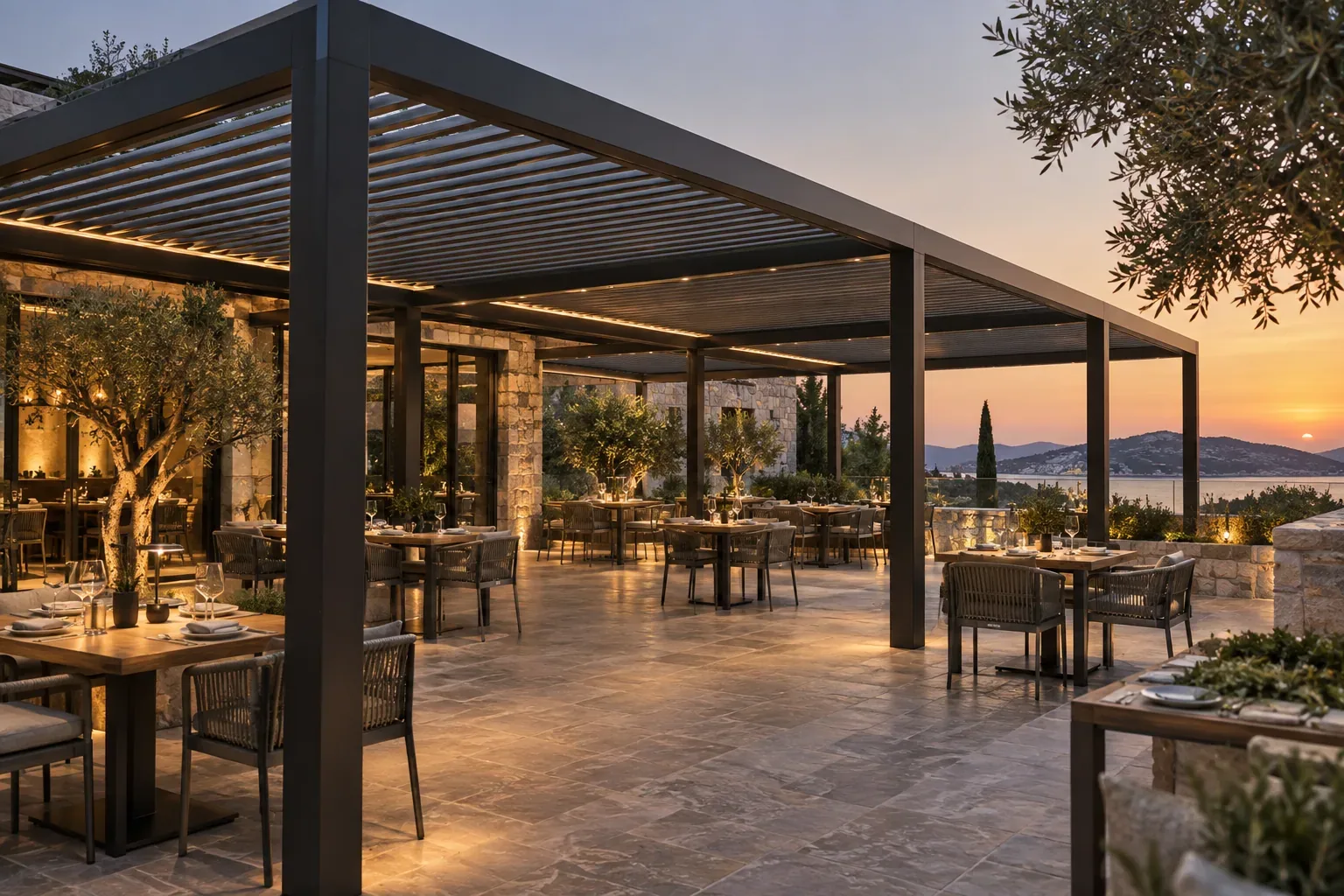
Plan a commercial pergola around seating, circulation, roof operation, modules, drainage, accessories, maintenance access, documentation and procurement inputs.
DIRECT ANSWER
What should commercial buyers consider when choosing a pergola?
Commercial buyers should define the operating use, seating and circulation plan, coverage zones, roof operation, module strategy, drainage route, electrical and accessory needs, maintenance access, project documentation and local requirements before requesting a proposal. Quantity and delivery destination also matter. Product selection should follow the operational brief and site constraints rather than a generic residential layout or an unverified performance claim.
WHO THIS GUIDE IS FOR
Use this guide to frame the right project questions.
- Restaurant or cafe operator
- Hotel and resort buyer
- Commercial contractor
- Dealer preparing a multi-unit proposal
Start with the commercial operation
Map seating, guest circulation, staff routes, entrances, service points and any areas that must remain uncovered. Define when the space operates and how roof adjustment fits normal staff responsibilities.
The pergola should support the space rather than simply maximize covered area. Keep access, visibility, escape paths and local operational requirements in the project discussion.
Plan coverage and modules together
Large terraces may be organized as multiple modules. Module planning affects posts, roof movement, drainage, controls and the relationship to the architectural grid.
Catalogue module values are early references, not blanket approval. Final arrangement depends on the selected model, overall geometry, support, exposure and site requirements.
Coordinate roof control and accessories
Choose roof operation according to staff interaction, desired opening behavior and power planning. Lighting, screens, glazing, fans or heating should be reviewed as compatible parts of the project rather than added without coordination.
Accessories can affect circulation, clear openings, wiring, maintenance and seasonal operation. Define priorities and acceptable trade-offs.
Request comparable project information
A useful procurement package includes the application plan, dimensions, quantities, mounting conditions, finish direction, accessory schedule, destination and required documents. Ask suppliers to identify assumptions and items requiring project confirmation.
Do not compare proposals only by headline price or unsupported claims. Compare the defined configuration, scope, interfaces, documentation and exclusions.
COMPARISON
Commercial procurement decision matrix
Use this table to structure a discussion, not as project approval.
| Project priority | Planning response | Information to prepare |
|---|---|---|
| Guest seating coverage | Map roof zones with circulation | Plan, furniture and operating layout |
| Frequent roof adjustment | Review motorized control concept | Power, staff interaction and control zones |
| All-season accessory strategy | Coordinate compatible side and comfort options | Opening sizes, services and maintenance access |
| Multiple areas or units | Develop a module and control schedule | Zone dimensions, quantities and labels |
| Clear proposal comparison | Use one RFQ input set | Scope, destination, documents and open questions |
PROJECT CHECKLIST
Information to prepare
- Commercial application and operating hours
- Seating, circulation and service routes
- Coverage zones and approximate dimensions
- Quantity and module concept
- Roof operation and staff interaction
- Drainage and electrical planning
- Accessory priorities
- Maintenance and service access
- Site logistics and delivery destination
- Required drawings and project documents
COMMON PLANNING MISTAKES
Assumptions to avoid
- Copying a residential layout into a commercial plan
- Maximizing coverage without protecting circulation
- Using one control assumption for every zone
- Adding accessories after openings are fixed
- Comparing vague proposals with different scopes
- Relying on unverified performance or lead-time claims
FAQ
Questions about commercial pergola buying guide
Which pergola is best for a restaurant?+
There is no universal best model. Start with seating, circulation, roof behavior, drainage, services and site conditions.
Can commercial pergolas use multiple modules?+
Yes, subject to model, layout and project review. Module planning should coordinate supports, drainage and controls.
What information should a hotel buyer provide?+
Provide the application plan, dimensions, quantities, operating priorities, mounting conditions, accessories, destination and documentation needs.
Should commercial projects use motorized roofs?+
Motorized control can suit frequent adjustment, but power, controls, staff workflow and maintenance access must be planned.
How should proposals be compared?+
Compare the same configuration, scope, project assumptions, interfaces, documentation and exclusions rather than price alone.
NEXT STEP
Discuss a commercial project
Share the operating plan, dimensions, quantity, destination and preferred options for review.
Discuss a commercial project